
- What Causes Sewer Line Problems?
- 1. Multiple Simultaneous Slow Drains
- 2. Recurring Sewer Backups
- 3. Hydrogen Sulfide Drain Odors
- 4. Gurgling Fixtures
- 5. Tree Root Intrusion
- 6. Damaged or Aging Lateral Pipes
- Sewer Camera Inspection
- Repair Options & Trenchless Tech
- Symptom vs. Solution Table
- What to Do During a Backup
- Frequently Asked Questions
What Causes Sewer Line Problems?
Every drain in your home—from your kitchen sink and upstairs master bath to the basement laundry tub—funnels wastewater into a single central pipe: your main sewer lateral line. This subterranean pipe travels beneath your yard or driveway before connecting to the municipal sewer main under the street.
In Lancaster County, thousands of homes built prior to 1980 rely on original clay tile or cast iron sewer laterals. Over decades of ground settlement, seasonal freeze-thaw cycles, and tree root expansion, older pipes become misaligned, crack, or corrode from the inside out.
Recognizing the early warning signs of sewer distress allows homeowners to address root infiltration or pipe bellies before wastewater backs up into living spaces.
1. Multiple Simultaneous Slow Drains
A single slow sink is usually caused by hair or soap scum in the immediate P-trap. However, when every drain on the ground level begins draining sluggishly at the same time, the main sewer lateral is struggling to discharge water into the city main.
2. Recurring Sewer Backups in Basements and Tubs
Because water seeks the path of least resistance, when the main sewer line is obstructed, wastewater has nowhere to go but backward. It surfaces through the lowest open plumbing fixtures in the building—typically basement floor drains, ground-floor shower basins, or laundry tubs.
3. Unpleasant Hydrogen Sulfide Drain Odors
Plumbing fixtures utilize curved P-traps filled with water to block sewer gases from entering living areas. If you smell a persistent rotten egg or sulfur odor indoors, or notice strong sewer odors outside near your yard cleanout, a cracked sewer pipe or dry drain trap is venting hazardous gases.
4. Gurgling Fixtures When Other Fixtures Run
When a toilet bubbles or gurgles after you drain the washing machine or run the shower, your drainage system is gasping for air. A restricted sewer line creates negative hydraulic pressure, pulling water out of fixture traps to let air enter, creating a distinct bubbling sound.
5. Tree Root Intrusion in Sewer Laterals
Tree roots are naturally attracted to the warm water, nutrients, and oxygen inside underground sewer lines. Microscopic root tendrils infiltrate microscopic joint gaps in older clay or cast iron pipes. Once inside, the roots feed on passing waste, expanding into massive spiderweb-like obstructions that catch toilet tissue and waste.
6. Damaged, Cracked, or Collapsed Pipes
Soil shifting, freeze-thaw cycles, and heavy vehicle traffic over unpaved driveways can cause underground pipes to settle, creating low spots ("bellies") where water and solids stagnate. In severe cases, corroded cast iron pipes collapse entirely, preventing any water passage.
Sewer Video Camera Inspection Process
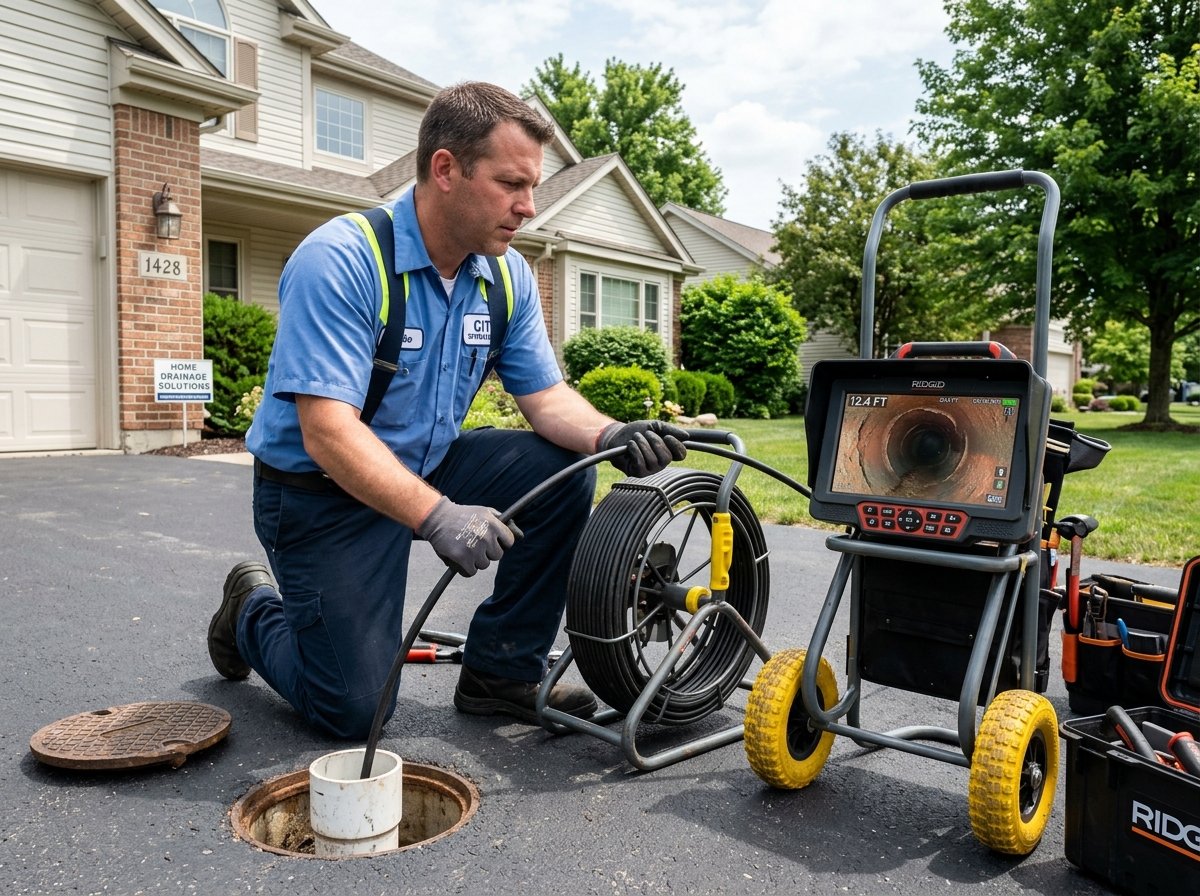
Determining whether a sewer problem requires simple motorized snaking, hydro-jetting, or pipe replacement is impossible from above ground. A fiber-optic sewer camera inspection eliminates all guesswork:
- A high-resolution, waterproof camera attached to a flexible rod is fed through the exterior yard cleanout into the main sewer lateral.
- A digital video screen displays real-time footage of the pipe interior, revealing exact root intrusion locations, pipe material, cracks, and bellies.
- A built-in radio transmitter allows the technician to locate the exact depth and surface position of the damage above ground, ensuring minimal excavation.
Repair Options and Trenchless Considerations
Historically, fixing a sewer line required digging a deep trench through pristine lawns, mature landscaping, and concrete driveways. Modern sewer solutions offer alternatives:
- Motorized Root Cutting: Steel blades rotate through the pipe to cut away root masses, followed by foaming root-killing treatments.
- High-Pressure Hydro-Jetting: 3,500 to 4,000 PSI water streams scour pipe walls clean of accumulated scale and grease. Learn more on our Drain Cleaning page.
- Pipe Relining (CIPP): An epoxy-saturated liner is pulled into the existing damaged pipe and cured in place, creating a seamless, root-proof "pipe within a pipe" without digging up your entire lawn. Learn more on our Lancaster Sewer Line Repair page.
Sewer Line Symptoms vs. Recommended Solutions
| Observed Symptom | Underlying Issue | Immediate Action | Recommended Repair Method |
|---|---|---|---|
| Toilets gurgle when laundry empties | Partial sewer restriction or blocked roof vent. | Avoid running simultaneous water appliances. | Routine Mechanical cable snaking and camera inspection. |
| Recurring backup every 6–12 months | Aggressive tree root infiltration in joints. | Cease water usage during backups. | Moderate Motorized root cutting & CIPP pipe lining. |
| Lush, sunken patch in front lawn | Underground pipe crack leaking wastewater into soil. | Keep children and pets away from wet lawn patch. | Urgent Targeted pipe repair or pipe bursting replacement. |
| Sewage backing up into basement floor drain | Complete main lateral obstruction or pipe collapse. | Shut off main water valve; evacuate affected rooms. | Critical Emergency sewer clearing and video evaluation. |
What to Do During an Active Sewage Backup
- Cease All Water Usage Immediately: Do not flush toilets, run showers, wash dishes, or run the laundry machine. Any water poured down any fixture will immediately overflow through the basement floor drain.
- Avoid Contact with Wastewater: Wear heavy rubber boots and protective gloves if you must enter the basement. Never touch sewage with bare skin.
- Turn Off Electricity in Flooded Areas: If standing sewage has reached basement wall outlets or electrical extension cords, shut off the breaker from a dry area or call the electric utility.
- Call for Professional Assistance: Contact an experienced plumbing provider immediately to clear the main obstruction.
We provide professional sewer lateral clearing across Lancaster County, including Lititz, Millersville, Ephrata, and neighboring boroughs.
Frequently Asked Questions
Who is responsible for the sewer line in Lancaster, PA?
In most Pennsylvania municipalities, including Lancaster City and surrounding townships, the property owner is legally responsible for the entire private sewer lateral line from the home's foundation to the connection point at the municipal sewer main in the street.
How do tree roots get into underground sewer pipes?
Sewer pipes carry warm water, moisture vapor, and rich organic nutrients. Hairline fissures in clay tile joints or mortar connections allow microscopic root tips to penetrate. Once inside, the roots thrive on the continuous moisture, rapidly expanding into thick root balls that block solids.
Can a sewer line be repaired without digging up my yard?
Yes. Trenchless sewer technologies—such as Cured-in-Place Pipe (CIPP) lining and pipe bursting—allow technicians to install a brand new structural epoxy pipe inside the damaged line through small access holes, preserving driveways, sidewalks, and established landscaping.
How long does a sewer camera inspection take?
A standard residential sewer camera inspection typically takes between 45 and 90 minutes. The technician inserts the camera through an accessible cleanout, inspects the entire line to the street main, and reviews the high-definition recording with you on-site.
What are the health risks of a sewer backup?
Sewage contains Category 3 "black water" laden with biological contaminants including Salmonella, E. coli, Hepatitis A, and parasitic Giardia. Airborne exposure to hydrogen sulfide and methane can cause headaches and nausea. Professional sanitation and extraction are strongly recommended.
About Lancaster Rapid Plumbing Editorial Team
This guide was developed by our editorial team to provide safety-first guidance on municipal and residential sewer lateral problems in Lancaster, PA.
Service Notice: Lancaster Rapid Plumbing connects homeowners with independent, licensed plumbing service providers. All sewer lateral clearing, inspection, and repair services are performed by local plumbing contractors.