
Why Do Household Drains Get Clogged?
A slow or gurgling drain is one of the most common residential plumbing annoyances. Under normal conditions, gravity and water flow sweep wastewater seamlessly through your home's drainage network and out to the municipal sewer or septic tank.
However, when organic waste, fats, mineral scale, or foreign items accumulate along the interior walls of your pipes, the pipe diameter narrows. Water flow slows, creates suction that pulls sewer odors into living areas, and eventually produces a total stoppage.
Understanding what caused your clog is the first step toward clearing it safely and preventing recurring blockages.
1. Hair and Soap Buildup
In showers, bathtubs, and bathroom sinks, human hair and pet fur are the leading causes of drainage failure. As long strands wash down the drain, they catch on the crosshairs of the drain strainer, the pop-up stopper linkage, or rough pipe joints inside the P-trap.
Once a few strands catch, traditional bar soaps—which contain animal fat and talc—coagulate into sticky "soap scum." This sticky residue traps more hair, dead skin cells, and shampoo oils, forming a dense, waterproof mat that standard water flow cannot break apart.
2. Grease and Food Waste
In the kitchen, the primary enemy is cooking fat, grease, and oil (FOG). When poured down a sink while hot, liquefied grease looks harmless. But as it travels through cooler drainage pipes beneath the floor, it quickly cools and solidifies into a waxy, sticky coating along the pipe walls.
Even homes equipped with powerful garbage disposals face severe kitchen clogs when fibrous foods (celery, corn husks, onion skins), expanding starches (rice, pasta, potato peels), or coffee grounds are flushed into the pipes.
3. Foreign Objects
Plumbing drains are engineered to transport only water, human waste, and rapidly dissolving toilet tissue. Small toys, dental floss, cotton swabs (Q-tips), bottle caps, and hygiene wrappers accidentally dropped into fixtures create instantaneous obstructions that snag passing waste.
4. Toilet Drain Blockages
Despite marketing claims on packaging, so-called "flushable wipes" do not disintegrate like toilet paper. Independent municipal tests demonstrate that synthetic wipes maintain tensile strength in water for months.
When flushed, wipes accumulate at pipe transitions and sewer cleanout bends, forming massive obstructions ("fatbergs") that require professional motorized augers to shred.
5. Multiple Slow Drains Across the Home
If a single bathroom sink drains slowly, the issue is almost certainly isolated to that fixture's P-trap. But if your kitchen sink, main bathroom shower, and basement drain are all draining sluggishly at the same time, the blockage is located deeper in your plumbing system.
Multiple slow drains indicate a restriction in the main sewer lateral or a blocked plumbing vent pipe on the roof, preventing air from balancing drainage pressure.
Safe DIY Troubleshooting
Before calling a plumber, homeowners can safely perform these initial checks:
- Plastic Zip-It Tool: Insert an inexpensive barbed plastic hair snake down tub and sink drains to pull out hair mats caught in the top 12–18 inches of the pipe.
- Cup Plunger with Water Seal: Fill the sink with 2 inches of warm water. Cover the overflow port with a wet washcloth to ensure an airtight seal. Place the plunger cup over the drain and plunge firmly with 10–15 rapid vertical cycles.
- Baking Soda and Vinegar Flush: Pour 1 cup of baking soda down the drain followed by 1 cup of white distilled vinegar. Allow the natural foaming action to sit for 30 minutes, then flush with a kettle of hot tap water to dissolve fresh soap residue.
Drain Cleaning Methods to Avoid
Additionally, avoid forcing coat hangers or sharp metal wires down drains, as they easily puncture older corroded copper or brass traps and scratch porcelain fixtures.
Drain Clog Symptoms vs. Possible Causes
| Drain Symptom | Most Likely Cause | Safe Homeowner Remedy | Professional Clearing Needed |
|---|---|---|---|
| Water pooling around feet in shower | Hair and soap scum mat trapped in strainer or P-trap. | Pull hair with plastic zip-it tool; plunge with cup plunger. | Routine If clog is beyond P-trap or recurring weekly. |
| Kitchen sink drains slowly with foul odor | Solidified grease, coffee grounds, or food waste in trap. | Hot water flush; clean out garbage disposal baffle. | Moderate If motorized mechanical snaking is required. |
| Toilet bubbles when shower drains | Main sewer lateral restriction or clogged roof vent stack. | Stop running water; avoid flushing multiple fixtures. | Urgent Sewer camera inspection and main lateral augering. |
| Basement floor drain backing up | Main sewer line blockage downstream from house foundation. | Cease all laundry, shower, and dishwasher usage. | Critical Hydro-jetting or motorized heavy-duty root cutting. |
When to Call a Drain Cleaning Professional
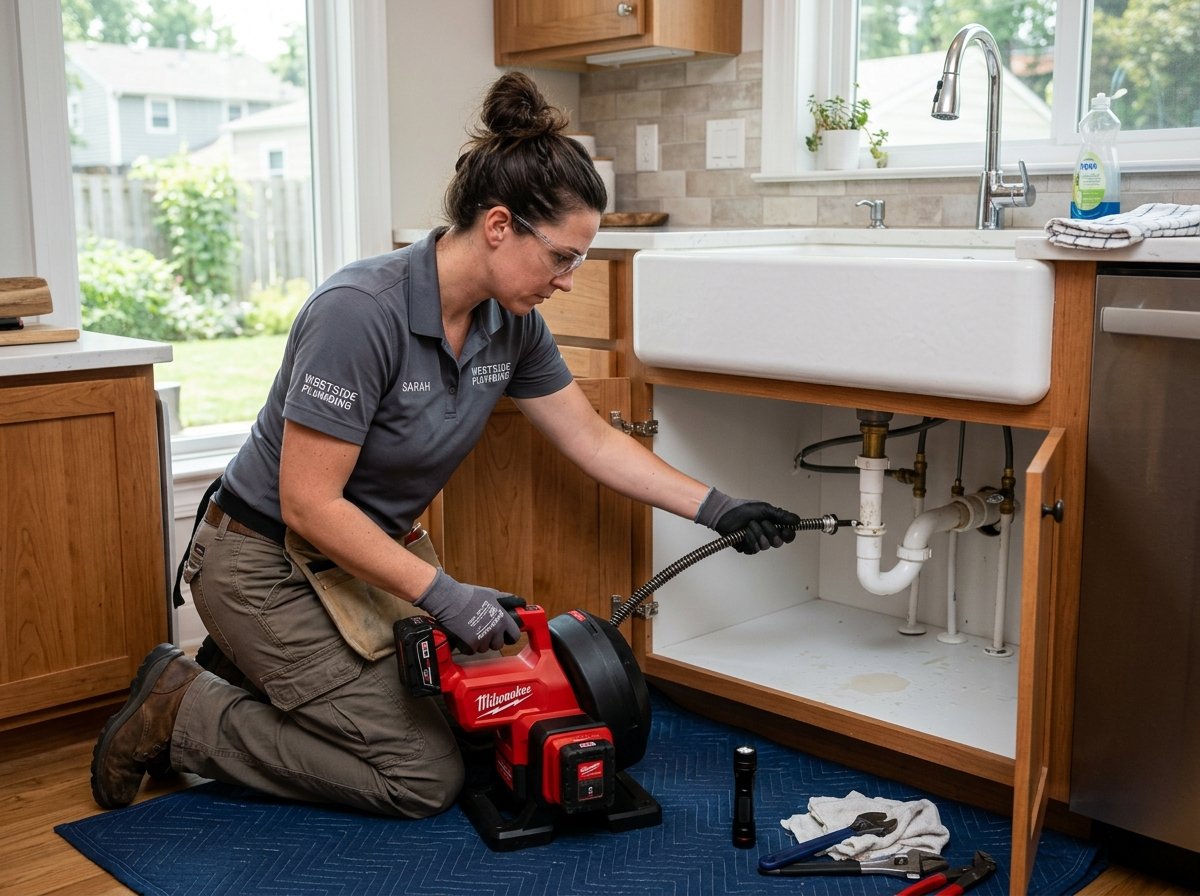
If safe plunging and hair extraction fail to restore free flow, do not pour chemicals down the line. Professional drain cleaning utilizes motorized steel cables with specialized cutting blades to slice through roots and grease without damaging the pipe.
Learn more about our motorized clearing capabilities on our Lancaster Drain Cleaning service page, or check service coverage across Lititz, Millersville, Ephrata, and neighboring communities.
Frequently Asked Questions
Why do chemical drain cleaners damage pipes?
Chemical drain openers work through violent caustic or acidic reactions that generate substantial heat. This thermal reaction can soften, warp, or crack plastic PVC pipes, melt solvent-welded joints, and corrode older cast iron lines. Mechanical clearing with a drain snake is far safer and more effective.
Can I pour boiling water down a clogged drain?
Very hot tap water is safe, but avoid dumping rolling boiling water directly down PVC drain pipes or onto porcelain toilet bowls. PVC drainage pipes are rated for temperatures up to 140°F, and extreme boiling water can soften rubber slip joints or crack cold porcelain.
What is the difference between a drain snake and hydro-jetting?
A drain snake uses a flexible rotating steel cable with a cutting head to bore a hole through obstructions like roots or hair. Hydro-jetting uses high-pressure water (up to 4,000 PSI) to scrub the entire circumference of the pipe clean of grease, scale, and silt, restoring the pipe to near-original capacity.
Why does my drain smell like rotten eggs?
A rotten egg smell is usually caused by hydrogen sulfide sewer gas escaping into your home. This happens when the water seal inside a P-trap evaporates in an unused drain, when decomposing hair and bacteria coat the overflow passage, or when a main sewer line is blocked.
How often should household drains be cleaned?
Routine homeowner maintenance (using hair catchers and hot water flushes) should be done monthly. For homes with older sewer laterals prone to tree root infiltration, professional preventative snaking or hydro-jetting every 18 to 24 months prevents unexpected sewage backups.
About Lancaster Rapid Plumbing Editorial Team
This guide was developed by our editorial team to help homeowners in Lancaster, PA clear clogs safely and avoid costly chemical pipe damage.
Service Notice: Lancaster Rapid Plumbing connects homeowners with independent, licensed plumbing service providers. All drain clearing services are provided by independent local contractors.