
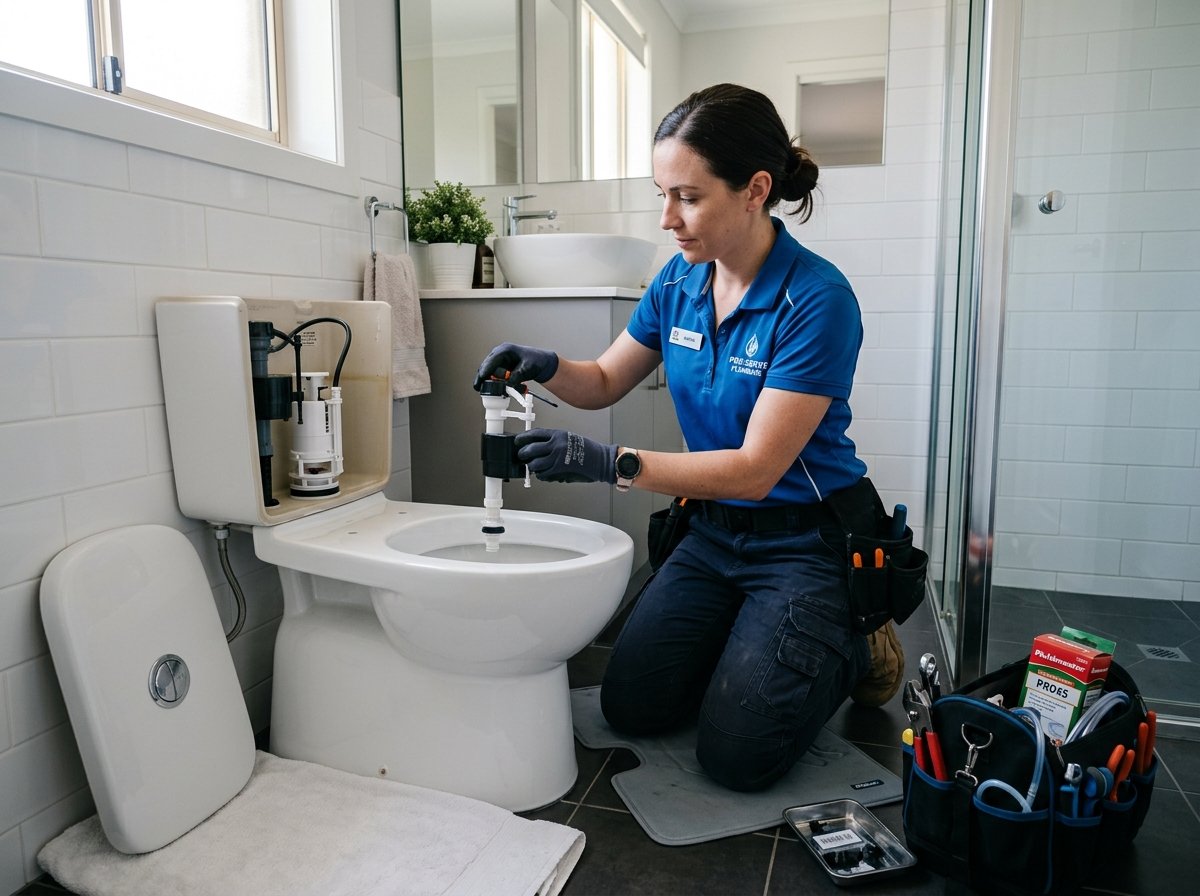
- Why Does a Toilet Keep Running?
- 1. Worn or Corroded Flapper Valve
- 2. Faulty Fill Valve Assembly
- 3. Incorrect Float Water Level
- 4. Flapper Lift Chain Problems
- 5. Overflow Tube Issues
- Simple Homeowner Checks (Dye Test)
- Running Toilet Troubleshooting Table
- When to Stop DIY Troubleshooting
- When Professional Repair Makes Sense
- Frequently Asked Questions
Why Does a Toilet Keep Running?
A toilet that runs continuously or periodically refills on its own ("phantom flushing") is more than just an irritating background sound. The Environmental Protection Agency (EPA) estimates that a single running toilet can waste over 6,000 gallons of treated water per month, adding substantial unnecessary costs to your municipal utility bill.
Fortunately, toilet tank mechanics are relatively simple. When you flush, the handle lifts a rubber flapper, releasing tank water into the bowl. As the tank empties, the flapper seals shut, and a fill valve refills both the bowl and tank until a floating cup or ball reaches a predetermined water level, shutting off the supply.
When any component in this sequence fails to seal or shut off completely, water trickles continuously down the overflow tube or past the flapper seal. Below are the five most common causes and how to resolve them safely.
1. Worn or Corroded Flapper Valve
The rubber flapper valve at the bottom of the tank is the single most common culprit behind a running toilet. Over 3 to 5 years, chlorine, chloramines, and minerals in municipal tap water cause flexible rubber to harden, warp, or develop a slimy bacterial coating.
When the flapper loses its flexibility, it can no longer form an airtight hydraulic seal against the plastic flush valve seat. Water continuously weeps into the bowl, causing the tank water level to drop until the fill valve kicks on for a few seconds to top off the tank.
2. Faulty Fill Valve Assembly
The fill valve (often called a ballcock) controls water entering the tank from the wall supply angle stop. Inside the fill valve head is a small rubber diaphragm and shutoff seal.
If sediment or mineral grit becomes lodged inside the valve cap, or if the internal diaphragm tears from age, the valve fails to shut off completely when the float rises. Pressurized water continues hissing into the tank indefinitely, spilling over into the vertical overflow tube.
3. Incorrect Float Water Level
If your float is adjusted too high, the water level will rise above the top lip of the overflow tube before the float has a chance to trigger the fill valve shutoff mechanism. Water will continuously pour into the overflow pipe and down into the bowl.
The ideal water level inside a residential toilet tank is approximately 1 inch below the top of the overflow tube (or aligned with the stamped water line mark on the interior porcelain tank wall).
4. Flapper Lift Chain Adjustment Problems
The small metal or plastic chain connecting the flush handle lever to the rubber flapper must have just the right amount of slack:
- Too Tight: The chain holds the flapper slightly elevated even when the handle rests horizontally, preventing the rubber from ever sealing completely against the valve seat.
- Too Loose: Excess chain links can drape down and get wedged beneath the flapper seal when the toilet is flushed, propping the flapper open and allowing water to drain continuously.
Adjust the chain so there is roughly 1/4 to 1/2 inch of slack when the handle is at rest.
5. Overflow Tube Issues
The hollow vertical tube in the center of the tank serves as a safety drain to prevent tank water from overflowing onto your bathroom floor. If the plastic overflow tube develops a hairline fracture along its base, water will seep through the crack directly into the bowl regardless of how new your flapper is.
Simple Homeowner Checks (The Food Coloring Test)
You can confirm whether your flapper is leaking in 20 minutes without using any tools:
- Remove the porcelain tank lid carefully and set it on a soft towel on the floor.
- Add 5 to 6 drops of dark food coloring (blue, green, or red) into the tank water.
- Wait 20 to 30 minutes without flushing the toilet.
- Inspect the toilet bowl. If colored water has appeared in the bowl, water is leaking past the flapper seal, and the flapper needs replacement.
Running Toilet Troubleshooting Reference Guide
| Observed Symptom | Likely Cause | Safe Homeowner Adjustment | Repair Needed |
|---|---|---|---|
| Toilet runs for 10 seconds every 20 minutes | Slow flapper seal leak ("phantom flush"). | Perform food coloring dye test; clean valve seat. | Routine Replace rubber flapper valve. |
| Continuous hissing sound inside tank | Fill valve failing to close or float set too high. | Turn float adjustment screw counterclockwise to lower water. | Routine Replace internal fill valve assembly. |
| Water level spilling into overflow pipe | Float set higher than top of overflow tube. | Lower float so water rests 1 inch below tube rim. | Routine Adjust float or replace fill valve. |
| Water pooling around toilet base on floor | Failed wax ring seal or cracked porcelain base. | Shut off water supply valve behind toilet base immediately. | Urgent Remove toilet, reset wax ring, inspect flange. |
When to Stop DIY Troubleshooting
While adjusting a chain or swapping a universal rubber flapper is a common DIY task, certain situations require professional care:
- Corroded Tank-to-Bowl Bolts: If replacing the flush valve requires separating the tank from the bowl, rusty steel bolts can snap or crack the porcelain tank if overtightened, causing a massive flood.
- Frozen Shutoff Valve: If the oval emergency shut-off valve behind the toilet is corroded and will not turn, forcing it with pliers can snap the copper supply stub inside the wall.
- Moisture Around the Base: If water is appearing on the bathroom floor around the toilet base, the wax ring seal has failed. Plunging or flushing will force wastewater into your subflooring.
When Professional Toilet Repair Makes Sense
Modern high-efficiency toilets utilize dual-flush towers, specialized silicone canister seals, and proprietary fill valves that require model-specific components. A professional plumbing technician can rebuild the entire tank assembly with durable commercial-grade parts in under an hour.
Explore our comprehensive Lancaster Toilet Repair services, or check service coverage across Lititz, Millersville, Ephrata, and surrounding communities.
Frequently Asked Questions
How much water does a running toilet waste?
A typical running toilet wastes between 100 and 200 gallons of water per day. A severe leak caused by a stuck-open flapper can waste over 1,000 gallons per day, adding upwards of $100 or more to a single monthly water utility bill.
Why does my toilet flush by itself in the middle of the night?
This phenomenon, known as a "phantom flush," is caused by a slow leak past the rubber flapper valve into the bowl. As tank water gradually empties, the float drops until it triggers the fill valve to refill the tank for a few seconds before shutting off again.
How often should toilet flappers be replaced?
In municipal water systems with chlorine treatment, rubber flappers typically last 3 to 5 years. Using chemical drop-in chlorine bleach tablets inside the tank severely degrades flexible rubber and silicone seals within months and voids manufacturer warranties.
Can I replace the fill valve myself?
Homeowners with basic plumbing tools can install a universal fill valve kit. However, care must be taken when disconnecting the water supply line to avoid cross-threading plastic fittings or snapping old copper angle stop valves. Professional installation guarantees code compliance and leak-free operation.
How do I arrange toilet repair in Lancaster, PA?
Call Lancaster Rapid Plumbing at (717) 750-0500 to describe your toilet symptoms and schedule an on-site repair with an experienced local plumbing technician.
About Lancaster Rapid Plumbing Editorial Team
This guide was developed by our editorial team to provide clear, actionable advice on diagnosing and repairing running toilets in Lancaster, PA.
Service Notice: Lancaster Rapid Plumbing connects homeowners with independent, licensed plumbing providers. All fixture repairs, rebuilds, and installations are performed by local plumbing contractors.