
- How Does a Sump Pump Work?
- Why a Sump Pump May Fail
- 1. Power Supply and GFCI Tripping
- 2. Stuck or Defective Float Switch
- 3. Blocked Discharge Lines
- 4. Pump Running Continuously
- 5. Strange Pump Noises
- Battery Backup Considerations
- Safe Troubleshooting Steps
- Failure Modes Comparison Table
- When to Call for Pump Repair
- Frequently Asked Questions
How Does a Sump Pump Work?
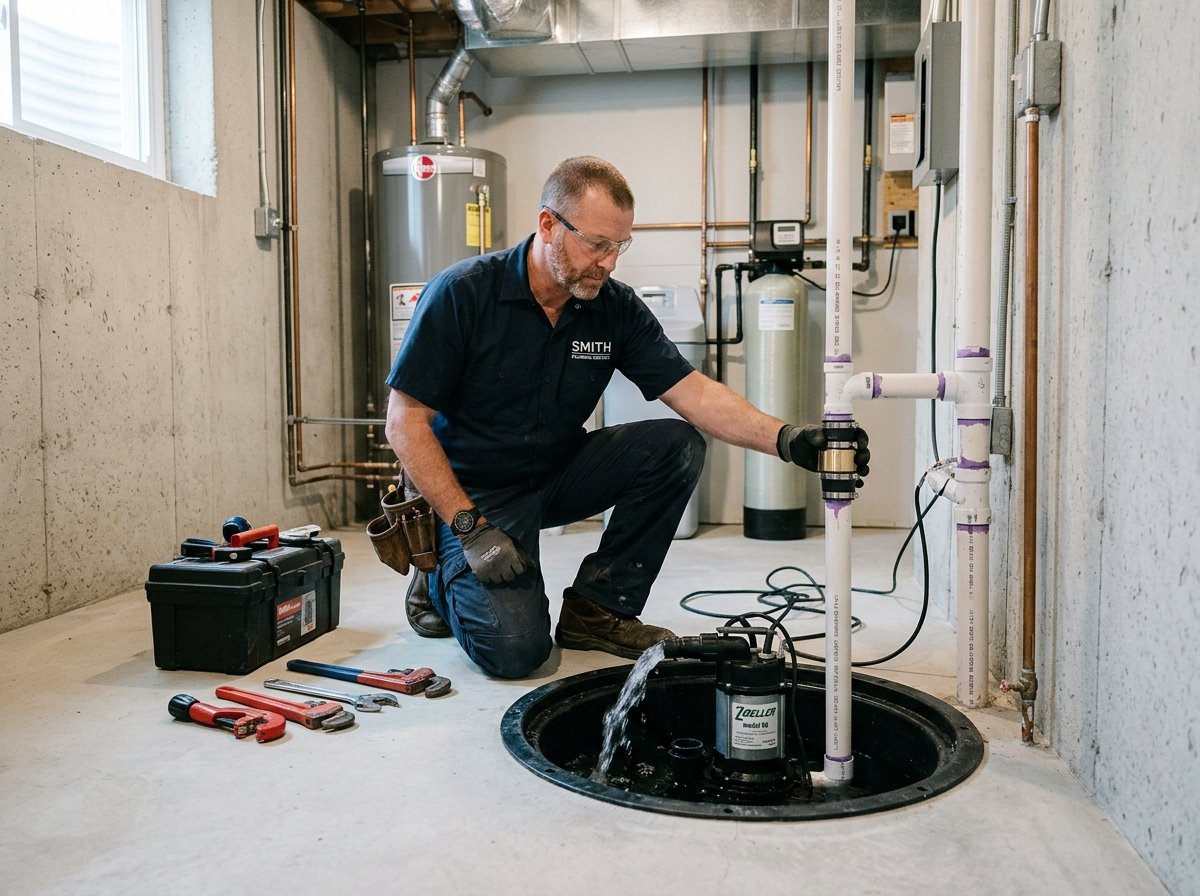
A sump pump is an automated mechanical pump positioned inside a gravel-lined pit (the "sump crock") carved into the lowest point of your basement or crawlspace floor. As hydrostatic groundwater rises around your home's foundation footers, perforated drain tiles funnel excess water into the basin.
When water inside the crock rises, a buoyant float switch rises with it. Upon reaching a trigger threshold, the switch activates the electric motor. An internal impeller spins rapidly, forcing water up a vertical PVC discharge pipe, through a one-way check valve, and out to a designated drainage area safely away from the foundation.
Why a Sump Pump May Fail
Sump pumps sit idle for months during dry periods, only to be called upon to pump thousands of gallons during sudden severe cloudbursts. When a pump fails during a storm, water quickly overwhelms the crock, flooding finished basements, ruining carpet, and damaging furnaces and water heaters.
1. Power Supply and GFCI Tripping Problems
The most common reason a sump pump fails to activate is a simple loss of electrical power. Severe thunderstorms frequently knock out municipal power grids—precisely when groundwater volume peaks.
Additionally, building codes require sump pumps to plug into Ground Fault Circuit Interrupter (GFCI) outlets. Moisture or minor electrical resistance can trip the GFCI outlet without tripping the main breaker panel, leaving the pump completely unpowered without the homeowner realizing it.
2. Stuck or Defective Float Switch
Mechanical float switches account for over 50% of all sump pump service calls. As water rushes into the pit, the pump motor vibrates slightly. Over time, the pump can shift against the side of the plastic basin, pinning the float switch against the basin wall so it cannot rise.
In other cases, internal electrical contacts inside older tethered float switches fail from corrosion, preventing the motor from engaging even when the float is fully buoyant.
3. Frozen or Blocked Discharge Lines
Water pumped out of the basement travels through an exterior discharge pipe. During Pennsylvania winters, freezing temperatures freeze standing water inside poorly sloped exterior discharge lines, creating an ice plug that prevents water from escaping.
In spring and autumn, autumn leaves, rodent nests, and mulch washed into the discharge outlet can also choke flow, causing the pump to run continuously against a closed head until the motor burns out.
4. Pump Motor Running Continuously
A sump pump that runs indefinitely without shutting off will quickly burn out its motor. Continuous running is typically caused by:
- Failed Check Valve: A rubber flapper check valve prevents water in the vertical pipe from draining backward into the pit once the motor stops. If the check valve fails, discharged water falls straight back into the pit, causing the float to trigger the motor over and over.
- Undersized Horsepower: A 1/3 HP pump may lack the flow capacity to overcome severe groundwater infiltration during torrential storms, requiring an upgrade to a 1/2 HP or 3/4 HP model.
5. Strange Grinding or Humming Noises
If your pump hums loudly but does not pump water, the impeller is either jammed with gravel debris or the motor capacitor has failed. Loud grinding or vibrating noises indicate worn motor bearings or a damaged impeller blade.
Battery Backup Sump Pump Considerations
Relying entirely on a single 120V electrical sump pump is high-risk. High winds and lightning storms often knock out electrical power at the exact moment groundwater volume peaks.
A battery backup sump pump system operates on a dedicated deep-cycle marine battery. When household power cuts out, an automated transfer switch instantly activates the secondary pump, providing up to 24 to 48 hours of continuous pumping capacity.
Safe Homeowner Troubleshooting Steps
- The 5-Gallon Bucket Test: Slowly pour a 5-gallon bucket of clean water into the sump pit. Verify that the float rises freely and the motor triggers automatically to evacuate the water in 5 to 10 seconds.
- Check the GFCI Outlet: Inspect the electrical outlet. Press the "TEST" button followed by the "RESET" button to verify that power is active.
- Clean the Sump Basin: Unplug the pump and remove any pebbles, mud silt, or debris from the bottom of the crock that could jam the impeller.
- Inspect Exterior Discharge: Walk outside and ensure the discharge pipe termination is unobstructed, clear of ice, and directed at least 10 feet away from the foundation.
Sump Pump Failure Modes & Solutions
| Failure Symptom | Most Likely Cause | Safe Initial Check | Recommended Solution |
|---|---|---|---|
| Water rising; pump completely silent | Tripped GFCI outlet, dead breaker, or failed float. | Press outlet RESET button; verify float moves freely. | Routine Reset outlet or replace float switch. |
| Motor hums loudly but moves no water | Impeller jammed with gravel; failed capacitor. | Unplug pump before clearing debris from pit floor. | Moderate Clean impeller or replace pump unit. |
| Pump cycles on and off every 30 seconds | Failed or missing one-way check valve on discharge. | Observe if water drains back down pipe after shutoff. | Routine Install new silent rubber check valve. |
| Pump runs continuously during freezing temps | Exterior discharge pipe frozen solid with ice plug. | Inspect outdoor termination point for ice mounds. | Urgent Thaw pipe and install freeze-relief discharge fitting. |
When to Call for Sump Pump Repair
If your sump pump is more than 7 to 10 years old, has suffered motor seizure, or is struggling to keep up with rainfall, prompt replacement protects finished basements from thousands of dollars in water remediation costs.
Explore our dedicated Lancaster Sump Pump Repair services or check service availability across Lititz, Millersville, Ephrata, and surrounding communities.
Frequently Asked Questions
How long do residential sump pumps last?
A quality submersible sump pump typically lasts 7 to 10 years depending on operational frequency and water mineral content. Replacing your pump proactively after 8 years prevents unexpected failure during major weather events.
Do I really need a battery backup sump pump in Lancaster?
Yes. Thunderstorms and heavy winter weather frequently cause local power grid failures. A battery backup system guarantees that your basement remains protected even when electrical power is completely cut off for 24 to 48 hours.
Why does my sump pump smell like rotten eggs?
During dry summer months, stagnant water trapped at the bottom of the basin allows sulfur-reducing anaerobic bacteria to proliferate, creating a rotten egg odor. Pouring a gallon of clean water mixed with a cup of vinegar into the pit flushes out stale water and neutralizes odors.
What size sump pump do I need for my home?
Most standard residential basements with average groundwater levels require a 1/3 HP sump pump. For homes situated in high water table areas, properties with long vertical discharge lifts (over 10 feet), or basements prone to heavy runoff, a 1/2 HP or 3/4 HP model is recommended.
How do I schedule sump pump service in Lancaster, PA?
Call Lancaster Rapid Plumbing at (717) 750-0500 to describe your basement pump setup and schedule professional testing, repair, or battery backup installation.
About Lancaster Rapid Plumbing Editorial Team
This guide was developed by our editorial team to provide safety-focused basement waterproofing and sump pump maintenance advice for homeowners in Lancaster, PA.
Service Notice: Lancaster Rapid Plumbing connects homeowners with independent, licensed plumbing providers. All sump pump installation, repair, and backup battery services are performed by local plumbing contractors.